Are you responsible for a property that dates back to the mid-20th century or had its drainage system altered during that period? If so, your wastewater could well be flowing through pitch fibre drains – and drainage issues may be present or just around the corner.
This problematic pipework was introduced across the UK during the 1940s when the country urgently needed an alternative to traditional fired clay drains due to wartime materials shortages. Pitch fibre drains continued to be used for homes, businesses and other properties until the 1970s, at which point more durable, reliable plastic pipework became the norm.
Initially, pitch fibre pipes seemed ideal for all sorts of building projects. ‘They were thought at the time to be the latest wonder material, being cheaper than fired clay pipes, and also lightweight and easy to handle,’ construction industry expert Jeff Howell remarks in The Telegraph. However, people’s confidence was misplaced, as many miles of pitch fibre drainage have failed to stand the test of time.
As our Bristol and Bath drains specialists will tell you, it’s important to check whether your property or a property you’re in the process of buying has this type of pipework. Thankfully, all you need to do is ask us to conduct a CCTV drain survey or homebuyer’s drain survey using our agile, powerful cameras, as we’ll explain.

Pitch fibre is made from insoluble, fibrous wood cellulose (the main component of trees’ cell walls) soaked in coal-tar pitch (a thick, waterproof substance formed when coal tar is distilled during industrial processes). So although it certainly wouldn’t win any awards for being environmentally friendly, it does have the kind of qualities drains need to carry wastewater effectively. As long as pitch fibre pipework is in excellent condition, it’s fairly strong, can withstand being exposed to water, and is unlikely to spring a leak. You can see why it appealed to construction companies all those years ago.
However, there’s a major problem with drainage systems that rely on this material. Pitch fibre is particularly prone to structural instability as it ages, especially if the drains have weak joints and are poorly bedded. That’s often the case with pipework used for housing estates, schools and other low-budget, fast-turnaround building projects completed between the 1940s and 60s. As the typical lifespan of a pitch fibre drain is only 40 years, numerous properties across Bath, Bristol and beyond could well have drainage systems that aren’t fit for purpose anymore. In fact, it’s not uncommon for Victorian or Edwardian clay drains, for example, to age better than pitch fibre ones.
Why is it so common for pitch fibre drains to develop structural defects as they get older? The reason is that they react badly to prolonged contact with three drain-clogging substances that often end up being poured down plugholes – fat, oil and grease – as well as hot water.
When pitch fibre pipework was first used, that behaviour wasn’t a major concern. After all, ingredients such as butter, margarine and cooking fat were rationed and rapid-boil electric kettles hadn’t yet been invented. But as food history data from the government indicates, lifestyles have changed dramatically since then. Processed convenience foods (which tend to be fatty, oily and greasy) have been commonplace since the mid-1950s. Plus, people boil more water these days as it’s so easy.
As a result of being exposed to large amounts of fat, oil, grease and hot water, pitch fibre pipe walls often separate into thin layers (a destructive process known as delamination), leading to blisters and warping. Deformed pitch fibre drains restrict the flow of wastewater, are likely to move, leak and suffer from root ingress, and easily get blocked. In severe cases, they may even collapse.
Fortunately, Bath and Bristol property owners and homebuyers, as well as those based in the surrounding area, can rely on Mega-Rod to address any concerns they have about pitch fibre drains. During a CCTV drain survey or homebuyer’s drain survey, we can identify pitch fibre drains and any drainage issues then suggest a plan of action.
Although deformed pipework can be excavated and replaced with modern drains, there is a far less disruptive option. A bullet-shaped re-rounding tool restores pitch fibre drains’ proper shape before they’re cleaned. Then a resin-impregnated polyester textile liner is fitted to strengthen the drains and optimise their performance.
If you’re worried your property may have pitch fibre drains or you’re experiencing pitch fibre drainage issues, call Mega-Rod today on 01225 422980 for prompt, professional assistance.
If you’re not in the habit of asking a drainage company to carry out professional drain cleaning at your property, it’s worth familiarising yourself with the key advantages of doing so. Some property owners don’t realise that whatever condition their pipework is in, drain cleaning can be beneficial – this kind of service isn’t just for blocked drains. Even if you’re not aware of any major problems, your drainage system’s performance could still be improved with the help of specialist drain jetting equipment, for instance.
In fact, when property owners have their drains professionally cleaned by our Bristol and Bath drains experts and see what a difference this can make to everyday life, they often tell us they wish they’d called us out sooner!
One of the biggest benefits of professional drain cleaning is that it’s suitable for all types of residential and commercial drains, including narrow, large-diameter industrial and ageing pipework. We clean the majority of our customers’ drainage systems with high-pressure jetting hoses (which are far more powerful than the pressure washers people use to clean their patios). But if your drains need particularly careful handling, we can use versatile metal drain rods with a whisk-shaped attachment or a flexible cable called a drain snake with a head like a corkscrew instead.
All of these tried-and-tested cleaning methods enable us to reach deep inside a property’s drains, refresh them, and break up and remove unwelcome material such as rogue wet wipes.
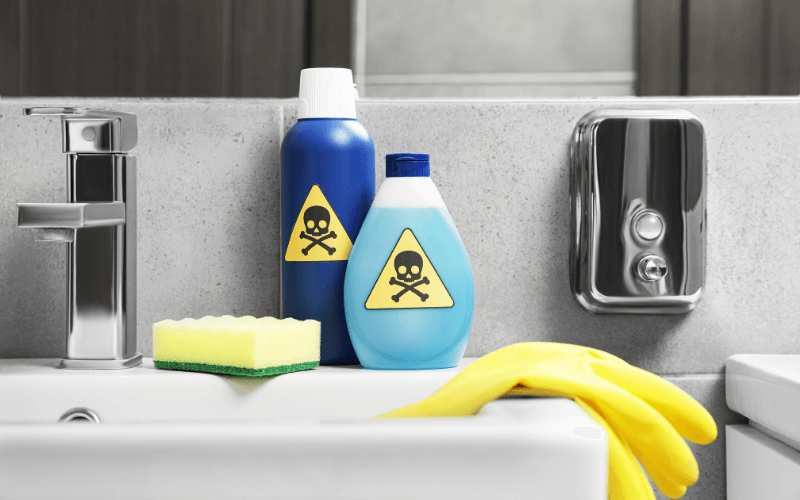
You’ll almost certainly have seen harsh, heavy-duty chemical drain cleaners for sale in DIY stores. If you pour the contents of one of those bottles down a plughole, you’ll unleash volatile, hazardous chemicals such as peroxides on your drainage system, with potentially extremely unpleasant consequences. As House Digest magazine emphasises, ‘one false move with these products can mean serious damage to your pipes, the environment – or even yourself’.
By contrast, drain jetting, rodding and snaking are all highly effective non-chemical drain cleaning methods. They’re therefore much safer than controversial cleaning fluids and can be relied on to give you better, more predictable results.
Food debris, cooking oil, fat, grease, twigs, leaves… These types of organic matter can all too easily get washed down your drains and create congestion or obstructions in the pipework, preventing wastewater flowing freely away from your property. You’re likely to experience slow-draining sinks or frequent backups as a result. As if that wasn’t bad enough, organic matter produces horrible odours as it breaks down.
Fortunately, our Bristol and Bath drain cleaning service can fix both problems by banishing the fat and other nasties lurking in your drains. So you can enjoy faster, more efficient drainage, as well as healthy, pleasant-smelling surroundings.
You don’t need to wait until you have a major drainage problem to get in touch with the Mega-Rod team. Professional drain cleaning is an important aspect of drain maintenance. It not only helps you to extend the lifespan of your drains by keeping them in good working order but also enables you to nip problems in the bud.
For example, invasive roots may have begun to creep into your drainage system. By using a rotating cutter alongside our drain jetting equipment, we can slice the roots up and flush them away before they form dense, tangled obstructions that are capable of causing serious, potentially costly pipe damage. In this way, professional drain cleaning helps you to protect your drains and save money in the long run.
If you’ve been putting off getting your drains cleaned professionally because you’re worried it might derail your day, let us put your mind at ease. Specialist drain cleaning, especially drain jetting, is fast, efficient and causes almost no disruption as it’s a non-invasive process.
Compare that to what may happen if your drainage system isn’t cleaned: one or more sections could end up collapsing due to congestion, damage and neglect. The collapsed pipework would need to be excavated and replaced, which is inevitably rather disruptive.
Asking our experienced drainage team to clean your drains regularly (ideally once a year) helps you to look after your pipework and your property. So why not add booking professional drain cleaning to your spring cleaning to-do list?
For drain cleaning from trusted experts, call Mega-Rod in Bath today on 01225 422980.
You know your property’s drains are underground, but do you know their exact location? How far down is the pipework? Can you describe the layout of your drainage system?
If you’re struggling to answer one or more of those questions, you’re not alone. The Bristol and Bath drains experts here at Mega-Rod help numerous residential and commercial property owners to familiarise themselves with the structure of their drainage systems. This often involves conducting CCTV drain surveys and sonar drain tracing – two of the specialist services we offer in Bath, Bristol and beyond.
With the detailed data we gather, we can create comprehensive, up-to-date drainage plans showing precisely where pipes and other important features are in relation to the buildings they serve, as well as providing helpful measurements and information about access points, direction of flow, etc. The data also helps us to pinpoint the location of any problems, such as congestion or drain blockages, so that we can identify and reach them rapidly without needing to dig up pipes. (And unless drains are extremely badly damaged, it’s normally possible to resolve issues in a non-invasive manner too.)
Asking a drain engineer to perform a CCTV drain survey and/or sonar drain tracing in order to create a drainage plan can be invaluable if:
If you want to check whether a drainage plan already exists for your property, you have a few options. You could check to see if the building’s previous owner left this type of document with the property deeds. If you have a new-build home, you may be able to request a drainage plan from the developers. Alternatively, you could see if your local council or water authority has one.
However, it’s important to be aware that any documents you obtain from those sources may not provide a comprehensive overview of your drainage system and could be out of date (for instance, they may have been produced before alterations were made to your drains).
‘The position of private drains […] that connect properties to our public networks are not normally shown on our records,’ Wessex Water points out. As a result, the company suggests you ‘carry out your own enquiries and investigations should you wish to locate them’. In other words, you need assistance from a drainage company.
When you want to know the exact location, layout and condition of your drains and obtain an up-to-date drainage plan, Mega-Rod’s CCTV drain survey and sonar drain tracing services are ideal.
For a clear, comprehensive overview of your drainage system, and to pinpoint any issues, call Mega-Rod today on 01225 422980.
Every property owner will encounter a water-related problem (for example, a nasty odour coming from plugholes or a tap that refuses to turn off) from time to time. Whether you’re faced with this kind of issue at home or work, you’ll want prompt assistance from a professional. The question is who should you call? Is a drain engineer, such as a member of the team here at Bristol and Bath drainage company Mega-Rod, or a plumber the most appropriate choice to diagnose and fix your specific water woes?
Because drainage and plumbing are both concerned with the flow of water at houses, offices and other buildings, it’s all too easy to assume that a drainage expert and a plumber do much the same work, but this isn’t actually the case. Although their roles complement each other, their skills and expertise differ in significant ways, as we’ll explain. Plus, there are separate trade associations for drainage and plumbing professionals, namely the National Association of Drainage Contractors and the Association of Plumbing & Heating Contractors.
Read on to familiarise yourself with the subject of drain engineers vs. plumbers so you can request the right sort of help in any situation.
One of the most fundamental differences between a drainage specialist and a plumber is the former deals with water flowing away from a property while the latter is focused on water flowing into and around the building.
For instance, Mega-Rod is ideally suited to helping you if the water won’t drain away from the sinks in your Bath restaurant kitchens and you need someone to check the underground pipes, whereas if the cisterns in the customer toilets aren’t filling up, you need a plumber instead.
Are you having trouble with water that hasn’t been used yet? If a shower head is dripping constantly, say, a plumbing service is required. Plumbers also install new appliances and so forth that draw fresh water into your property, such as a washing machine or bathroom suite. Indeed, a dictionary definition of a plumber is someone ‘who installs, repairs, and maintains piping, fittings, and fixtures involved in the distribution and use of water in a building’. In a nutshell, plumbing is concerned with the supply of water.
By contrast, you’ll want to contact a drainage company when you need expert help to resolve problems with water that’s been used in kitchens, bathrooms, etc. – in other words, wastewater. This is the kind of water that travels through drains and sewers to wastewater treatment plants, such as Saltford Water Recycling Centre in Bristol. As wastewater contains toilet paper and human waste (and sometimes used cooking oil, wet wipes or other pipe-clogging material that shouldn’t be washed or flushed down drains), it’s hazardous to people’s health. Keeping your drainage system in full working order is therefore absolutely vital, which is why our drainage experts are so skilled at checking for, diagnosing and fixing drain issues.
Plumbing problems tend to be easy to spot. You might notice a leaky water pipe in your garage or a pool of water in front of your dishwasher, say.
However, if the source of the problem isn’t visible or easy to locate, the likelihood is that it’s hidden underground in your drains and therefore requires a drain engineer instead of a plumber. If there are frequent backups in the kitchen sink, basin or shower, for example, invasive roots, a mini fatberg or collapsed drain could be to blame. Only a drain unblocking expert will have the right equipment to locate, identify and eradicate the problem. This specialist work is likely to involve a comprehensive CCTV drain survey using an agile camera, followed by drain root cutting or powerful drain jetting to restore the flow of wastewater.
Indeed, choosing the best drainage company for your home or business involves ensuring that you find a firm that covers all aspects of drain care, from inspections to drain unblocking, and has a comprehensive range of drainage equipment. Whereas plumbers typically only deal with relatively minor, above-ground problems, the drain engineers at Mega-Rod can be relied on to resolve problems of any size that may be lurking in domestic drains or larger-diameter commercial drains in Bath, Bristol and the surrounding area.
Bath and Bristol Drain Services from the Experts
If your wastewater is misbehaving, a plumber is unlikely to be able to help. But don’t worry – you can contact us for rapid assistance from our experienced Bristol and Bath drains experts.
For all your drain care needs, call Mega-Rod today on 01225 422980.
Across England, drains serving homes and businesses are currently under much greater strain than usual due to heavy rain and flooding. When Storm Henk arrived in early January, it unleashed torrential downpours on vast swathes of the country, becoming the eighth major storm in just three months, as BBC News reports. At the time of writing, more than 160 flood warnings are in place for parts of England and numerous waterways are swollen.
As a Bath drainage company, we were saddened to see one of the city’s most iconic landmarks, Pulteney Weir, submerged as a result of the River Avon’s rising water levels. Meanwhile, areas around Bristol (where we also provide drain cleaning and other services) were flooded when the Avon burst its banks there.
Whether you live in Bath, Bristol or elsewhere, you’ll want to familiarise yourself with the key ways in which stormy weather can affect your property’s drains – and how the drain experts here at Mega-Rod can help you to keep your wastewater flowing.
After all, global warming is set to make intense rainfall an increasingly common occurrence. ‘For every 1°C more that the air warms, it can hold about 7% more water,’ the Met Office explains. The weather forecasting service adds that the UK ‘is expected to experience wetter winters’ because of climate change and drainage systems could well suffer as a result, especially in urban areas with few green spaces available to absorb excess rainfall.
It’s important to be aware of the effects that waterlogged soil can have on your drains. When soil is very wet, it’s much heavier than normal and can therefore exert enormous pressure on underground pipework. This can exacerbate any existing structural problems such as cracks and create new damage.
Rain-soaked soil is also unstable – connections between pipes may be weakened as the earth shifts, so your drains could fall out of alignment with shared lateral drains, say.
If your drains leak and rupture, wastewater will pour into already saturated soil.
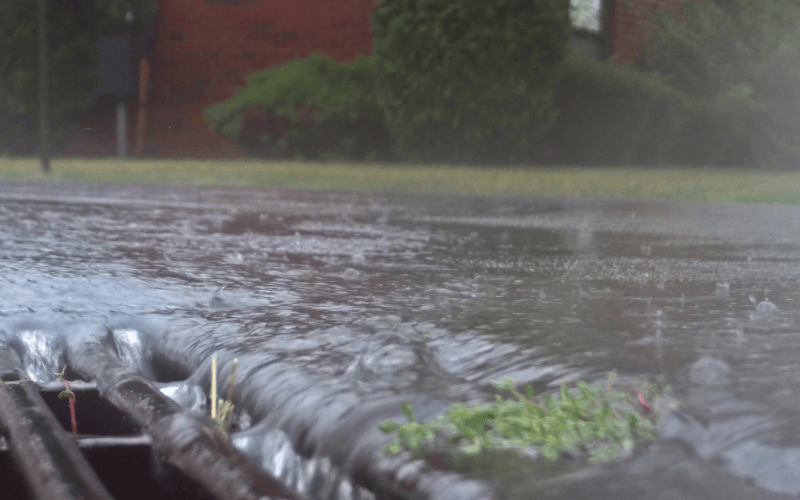
Heavy rain can wash plant matter such as leaves, bark and twigs, as well as litter, down your drains through exposed gratings.
This debris can stop wastewater flowing freely away from your property, especially if it sticks to congealed cooking oil or gets tangled up with fibrous wet wipes (two of the main causes of blocked drains).
Excess Rainwater Overwhelms Drains
Of course, it’s not just debris that property owners with exposed gratings should be concerned about during heavy rain. If rainwater floods pipes that are only designed to carry wastewater, it can overwhelm the drainage system.
If your drainage system – or entire property – is flooded, you’re likely to experience frequent backups (one of the most unpleasant signs of blocked drains). In other words, water will travel back up drains and other pipes and pool in toilets, sinks, etc. as it has nowhere else to go.
If temperatures then plummet, the water in your pipework may freeze and therefore expand. Frozen pipework is one of the worst winter drainage problems; the pipes can burst under the pressure the ice exerts on them.
Heavy rain can also spell trouble if your property has a septic tank instead of being connected to the sewer network.
If rain soaks the earth, it may penetrate the septic tank through any cracks. If the soggy, unstable soil moves, the tank could be dislodged from its correct position, which in turn may prompt pipework to come adrift.
Plus, your drainage field may be too saturated with rainwater to process wastewater adequately.
If heavy rain leads to a drain emergency at your property (for example, if you suspect a pipe has ruptured or water is backing up throughout the building), you’ll be relieved to hear we offer a 24/7 drain emergency callout service – simply call us on 01225 422980.
In addition, we encourage property owners to book regular drain inspections and drain maintenance to defend their drainage system against heavy rain-related problems and other issues. Our comprehensive CCTV drain inspections bring to light problems such as loose joints, cracks or congestion caused by debris so they can be resolved. What’s more, we also have the skills and equipment to provide powerful, reliable drain cleaning and drain unblocking services, enabling you to keep your drainage system working whatever the weather. Many customers rely on our efficient septic tank emptying and cleaning services too.
Is heavy rain playing havoc with your drainage system? Contact Mega-Rod in Bath for prompt, professional assistance.
When you’re buying a new home, there are numerous important tasks you need to cross off your to-do list, from exchanging contracts to finding a reliable removal company. With so much else to think about, you could well be tempted to adopt an ‘out of sight, out of mind’ approach to the property’s drainage system instead of booking a specialist homebuyer’s drain survey.
After all, you’ll almost certainly have arranged for a surveyor accredited by the Royal Institution of Chartered Surveyors or Residential Property Surveyors Association to conduct a general survey of the property (which is sometimes referred to as a home, house or building survey). That kind of survey is regarded as ‘an expert inspection of a property’s condition’, says Which?, the consumer affairs organisation. You might therefore be wondering whether you really need a homebuyer’s drain survey as well.
However, you may not have realised that in-depth drain inspections ‘aren’t usually included’ in standard surveys of residential properties, as mortgage broker Habito points out. As leading Bristol and Bath drainage engineers, we often conduct specialist drainage surveys for homebuyers using powerful colour CCTV drain cameras (indeed, we were early adopters of this technology) and know they can be invaluable.
The reality is that a surveyor conducting a general survey of a house is unlikely to have the expertise or equipment required to perform an extensive drain inspection or test the drains. General surveys can certainly be helpful for homebuyers, but they tend to focus on visible, accessible areas.
By contrast, when you ask Mega-Rod to perform a homebuyer’s drain survey, you can be confident that one of our highly skilled drainage surveyors will examine every inch of the underground pipework. This specialist survey will only take a couple of hours or so and doesn’t require excavation work. Our CCTV drain cameras are mobile and fitted with LED lights. We have full control of them and can pan, rotate and zoom, as well as take photos and make recordings. We also have the ability to employ sonar technology to pinpoint a pipe’s location, for instance. Plus, we’re more than happy to perform drain cleaning on the same day as the survey to spruce up the pipework.
You can therefore be confident that your homebuyer’s drain survey will give you a clear, in-depth understanding of your chosen property’s drainage system (including its size and location) in addition to identifying any problems. For example, the survey might reveal drain congestion or blockages, rodent infestations, invasive roots, cracks and leaks or bigger structural issues such as collapsed drains. All our findings will be included in a detailed drain survey report, and we’ll also discuss potential next steps with you.
While a specialist drain survey can benefit anyone buying a home, this service is likely to be particularly helpful if:
Another compelling reason to book a homebuyer’s drain survey is that your chosen mortgage lender and/or home insurance provider may insist on one because they want to know exactly what condition the property’s drainage system is in before entering into a legal agreement with you. This is a clear indication of how important a drainage inspection can be when you’re moving home.
Your homebuyer’s drain survey will ideally take place after your offer on the property has been accepted by the seller but before you sign on the dotted line. If it reveals a major concern, you therefore have the opportunity to withdraw from the sale or negotiate a better deal with the seller.
In a nutshell, a homebuyer’s drain survey could help you get a mortgage and home insurance, resolve drain problems before they take hold and become less affordable to fix, and reduce your new home’s purchase price. Indeed in light of the potential benefits, a homebuyer’s drain survey is ‘arguably something that more people should consider,’ emphasises Homebuilding & Renovating magazine.
When you need an efficient, comprehensive, specialist inspection of a property’s drainage system in Bath, Bristol or the surrounding area, you can rely on our professional, helpful drainage surveyors.
Book your homebuyer’s drain survey or request a free quote by calling Mega-Rod today on 01225 422980.
The coldest months – December, January and February – can be a testing time for your property, including your drainage system. This is especially true if you own a period property with ageing drains or your drains were laid in shallow trenches (the minimum depth for a drain is 600mm). However, it must be said that winter can be cruel to any pipework so drain care is especially important at this time of year.
Whether you’re preparing your home for winter or trying to ensure another building such as a school or factory emerges unscathed from this challenging season, it’s important not to overlook your drains. As our experienced Bristol and Bath drain engineers will tell you, pipes are most at risk when they’re at the mercy of harsh weather. Being buried underground doesn’t mean a drain will escape winter’s cold grasp.
The Met Office points out that this autumn was ‘very mild’. The sudden arrival of sub-zero temperatures, ice and snow in Somerset and elsewhere has therefore come as even more of a shock than usual to many people. But if you feel caught out by the change in season, don’t worry. Our winter drain care tips are designed to help you keep your wastewater flowing no matter how bad the weather gets.
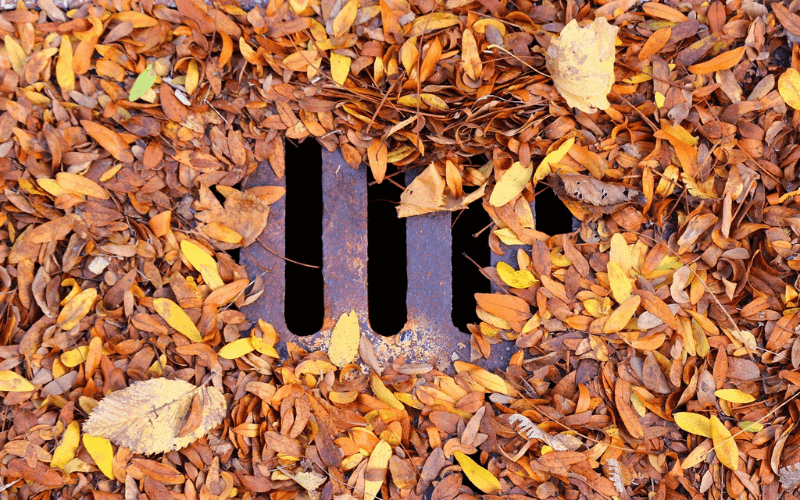
At this time of year, if you look at the ground around your property or your gutters, you’re bound to see many fallen leaves, some of which will be in soggy clumps. There could well be other kinds of plant debris too, such as twigs and dead moss. You’ll want to scoop up and dispose of all this plant matter so it doesn’t get blown or washed into your drains over the winter, as it can easily clog the pipework.
Another winter drain care tip is to cover gratings with plastic drain guards. They fit neatly around the bottom of downpipes and soil pipes and prevent stray leaves, etc. entering the underground pipework.
During winter, many people enjoy comforting, rich foods, as exemplified by the popularity of traditional Christmas dinners. The trouble is that after cooking roast turkey with stuffing, gravy and vegetables, you’ll need to get rid of lots of fat, oil and grease.
As drain unblocking experts, we know those substances are among the major causes of drain obstructions. Plus, they congeal faster and set harder in cold weather. That’s why you should never pour fat, oil or grease down your plugholes, especially during winter. Nobody wants a mini fatberg in their drainage system.
How should you dispose of fat, oil and grease? Let them cool a little then pour them into a robust container that can be sealed. After they’ve set, put the container in the bin.
If there’s a chance those nasties are already lurking in your drains, our drain jetting service can eliminate congestion and blockages and guard against future issues. We use high-pressure water jets, not harsh chemicals, to deep-clean domestic and commercial drains.
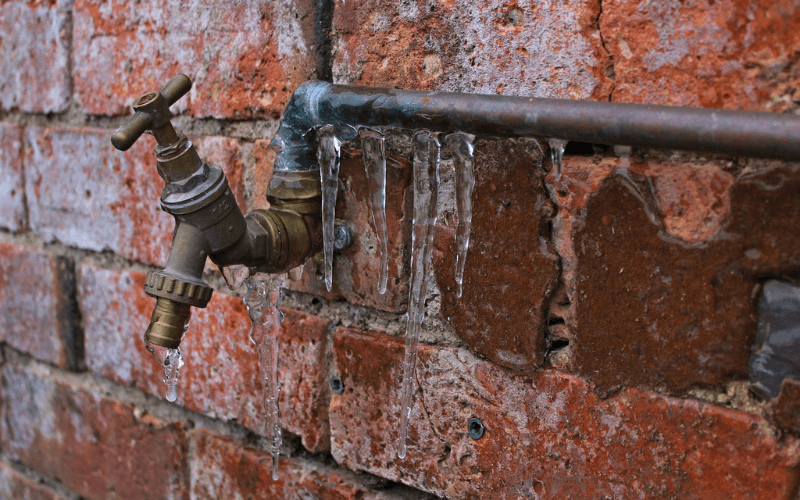
The most serious winter drainage problem is frozen drains. When temperatures plummet, wastewater may freeze, which is extremely bad news for your drainage system. To make matters worse, your drains are likely to be fuller at this time of year due to the fact winter often brings heavy rainfall.
When water freezes, it expands by 9%. Ice inside pipes can therefore be destructive:
If you suspect wintry weather has made your drains freeze, you’ll be relieved to hear we offer a 24/7 emergency callout service in Bath, Bristol and beyond. So don’t panic – simply call 01225 422980.
Another way we can help you is by conducting a CCTV drain survey – why not arrange one for your property before winter really sets in? The survey will reveal any weaknesses or obstructions, such as ice, requiring action.
There are also things you can do yourself to help prevent frozen drains. Pour hot (but not boiling) water down plugholes regularly and keep the temperature in your property above 12°C. Pay attention to above-ground pipes too (some carry wastewater to drains): you can insulate them with phenolic foam. Add insulating covers to outside taps too.
We’ve been helping customers to resolve winter drain problems since the 1980s. Whether you need drain unblocking, drain jetting or CCTV drain inspection services, for instance, you can rely on us.
For expert help with drains this winter, contact Mega-Rod in Bath today.
The UK drainage industry encompasses hundreds of companies. There’s even a major trade event, the National Drainage Show, which takes place annually in November and showcases drainage specialists’ skills.
Many drainage specialists’ day-to-day work involves helping homes and businesses to keep their wastewater flowing freely by providing drain unblocking, CCTV drain surveys and other vital services. But with so many to choose from, how can you ensure you pick the best drainage company for your needs?
Mega-Rod has been looking after drains in Bath, Bristol and beyond for decades, so we’re well-placed to offer advice about what to look for in a drainage company. Read on to discover what we firmly believe makes this kind of business stand out.
Whether you want to arrange a homebuyer’s drain survey, need help to remove invasive roots or have another issue, it makes sense to contact drainage specialists who have in-depth knowledge of your local area. That won’t necessarily be the case with nationwide firms, as their drainage engineers may cover vast areas.
By contrast, we’re a local, independent, family-run firm. We focus on specific places – Bath, Bristol and the surrounding area. As a result, our expertise in relation to the local drain and sewer network and water and sewerage companies is second to none and helps us to work extremely effectively and efficiently. It’s no wonder that over the years major local organisations, including the University of Bath and Wessex Water, have chosen our drainage services.
Another benefit of choosing a drainage company that focuses on your local area is the team can respond rapidly. We’ll often be at customers’ properties in less than 60 minutes. ‘They arrived within the hour, cleared the blockage and left everything clean and fresh,’ remarks Nick, one of our commercial customers, in his review.
What if you encounter a serious issue, such as a suspected collapsed drain, outside normal working hours? In that case, you’ll want a drainage company that goes the extra mile. Indeed, Mega-Rod offers 24/7 emergency callouts, so you can contact us at any time.
If you choose a drainage company with a comprehensive range of services, spanning everything from CCTV drain surveys to root cutting, you’ll make life easier for yourself in the long run. That’s because you won’t need to deal with multiple firms to get problems fixed.
We cover every aspect of drain care – inspections, cleaning/maintenance, unblocking, etc. Whether you need assistance with domestic drains, large-diameter commercial drains or septic tanks, we have the skills, equipment and vehicles required. Powerful CCTV cameras, jetting hoses, vacuum tankers and more help us to resolve problems everywhere from homes to hospitals.
Blocked drains and related problems can lead to unpleasant surprises, from nasty smells to backups. When your drainage issues have been resolved, the last thing you want is to find an unpleasant surprise on your invoice too.
That’s why Mega-Rod offers free, clear quotations and transparent pricing with no hidden extras. Plus, we’re one of the few firms that don’t pay our drain engineers on commission. So they’re on your side, not salespeople in disguise. You can therefore be confident you’ll only pay for work that’s strictly necessary and truly beneficial.
A great way to tell if you’re likely to be able to rely on a particular drainage company or not is to check whether the firm is part of the Which? Trusted Trader scheme. The well-known consumer issues organisation carries out rigorous trader assessments, encompassing everything from customer references to administrative procedures. ‘Those who don’t make the grade don’t get endorsed,’ Which? makes clear.
Mega-Rod is proud to be a Which? Trusted Trader and uphold the scheme’s core values, including honest prices and excellent customer service.
Reading what other people say about a specific drainage company can give you a clear idea of what your own experience with that firm may be like. First-class drainage engineers will get lots of glowing feedback from satisfied customers.
Mega-Rod has received many five-star customer reviews – there’s a selection on each page of our website. They highlight our professionalism, friendliness, knowledge, skills and successful track record. As a customer called Simon emphasises, ‘I’ve had lots of drain surveys & drainage work done in the past due to various house moves and I can honestly say Mega-Rod as a company stands out by miles as the best.’
For Bath drain unblocking, Bristol drain cleaning and related services you can rely on, call Mega-Rod today on 01225 422980.
If someone told you that there are enormous, subterranean monsters called fatbergs growing in UK sewers and wreaking havoc on the country’s wastewater management infrastructure, not to mention the environment, you might think they’d been watching too much Doctor Who. However, water and sewerage companies know all too well that monstrous fatbergs really do lurk in the sewers connecting your property’s drains to regional wastewater treatment plants, as they spend £100 million per year on removing them.
Fatbergs – giant, greasy blockages that can be hundreds of metres long and weigh well over 100 tonnes – have their origins in what some people pour and flush down domestic and commercial drains on a daily basis. But the good news is that everyone can play a role in winning the war against these sewer ‘monsters’, as we’ll explain.
A key reason why fatbergs have become a major ‘modern-day challenge’, in the Institution of Civil Engineers’ words, is that many people haven’t heard of them and don’t know why they develop. Indeed, research by the ICE has found that ‘nearly 40% of UK adults remain unaware of fatbergs’. As a result, a significant proportion of people are likely to be contributing to the formation of these deeply unpleasant obstructions without realising what a negative effect their actions are having.
What is a fatberg made from? A fatberg is a combination of cooking oil, fat and grease some people pour down sinks and the fibrous, absorbent items (wet wipes, kitchen roll, nappies, tampons, etc.) they flush down toilets. As Bristol and Bath drain unblocking experts, we know these nuisance substances and rogue items are major causes of blocked drains; the liquids congeal and wipes and other solids stick to them, creating mini fatbergs in your pipes that stop your wastewater flowing freely away from the building. (That’s why cooking oil and all the other culprits should be put in the bin instead.) If these nasties are carried by wastewater from your drains to the sewers, they may well help to create or enlarge vast sewer fatbergs that ‘can set as hard as concrete’, as ITV News points out, and are magnets for rats.
If your neighbourhood’s sewers get blocked by a fatberg, there’s a serious risk that raw sewage will escape, causing nasty backups in your property, flooding streets and gardens, polluting waterways and harming wildlife. That’s why the UK’s fatberg problem threatens communities – and why we all need to make a concerted effort to overcome it.
As you can imagine, getting rid of a massive, rock-hard fatberg is no easy task. When Channel 4 News investigated fatbergs, they discovered that water companies have three main ways of dislodging and removing these blockages from the pipes. They break up fatbergs with high-pressure water jets (a method similar to our highly effective drain jetting technique, which we use when unblocking drains) or shovels (if the sewer walls are particularly old), before employing suction hoses to remove the pieces. The process can take weeks to complete, plus it’s dangerous for the teams working in the sewers. Fatbergs can release toxic gases, so personal protective equipment and breathing apparatus must be worn. What’s more, if these awful blockages have weakened the pipes’ structure, whole sections of the sewer network will need to be replaced.
Once the fatberg chunks have been removed from the sewers they’re transported to specialist waste disposal sites. By heating and repeatedly filtering the pieces, it’s possible to separate the oil and grease from the rest and use it to create biodiesel. But that’s the only ray of light in a grim situation.
Fortunately, fatbergs can be prevented; they aren’t an inevitable consequence of modern life, the widespread consumption of fatty foods or prevalence of non-biodegradable products.
In fact, there are a couple of simple, practical steps you can take to ensure that you don’t end up adding to any fatbergs in your area:
We have more than 40 years of experience in swiftly, and successfully unblocking drains for businesses and homeowners, using drain jetting and other methods.
For commercial and domestic drain unblocking you can rely on in Bath, Bristol and beyond, call Mega-Rod today on 01225 422980.
Perhaps you’ve noticed signs of blocked drains, such as foul smells or basins emptying slowly. Or perhaps you just want to perform some drain maintenance by cleaning out your drainage system to stop cooking fat or other nasties from creating obstructions in the first place.
In these sorts of situations, you may be tempted to buy a heavy-duty chemical drain cleaner (also known as a drain unblocker or drain opener) from a DIY store, pour it down the plughole and hope for the best. After all, such products are readily available, inexpensive and get to work in less than half an hour. But is a harsh chemical drain cleaner really the ideal solution when you want to improve the flow of wastewater at your residential or commercial property? What effective, non-chemical drain cleaning methods are available instead?
As a leading Bath and Bristol drainage company and Which? Trusted Trader, Mega-Rod is well placed to advise you about how to keep your drainage system working properly. Moreover, we offer an expert drain cleaning service for homes and businesses – without relying on chemicals.
Chemical drain cleaners are sold in the form of liquids or water-soluble powders/flakes and often marketed as intensive, industrial-strength cleaning aids. They’re ‘among the most hazardous household products available to the public’, in Wikipedia’s words.
There are three main types of heavy-duty chemical drain cleaning products, and their active ingredients are volatile, potentially dangerous substances.
Using chemical drain cleaners carries significant risks. People should wear personal protective equipment, including safety goggles, face masks, protective suits and gloves. Properties must be well-ventilated – harsh cleaning chemicals often produce toxic fumes. (And if you call in a drainage expert after trying a drain cleaning product, it’s important to make them aware that chemicals are present so they can protect themselves too.)
These cleaning products can be harmful to your health. If you inadvertently inhale the fumes, you’re likely to experience serious respiratory issues. Splashing drain cleaner on your skin or in your eyes can lead to chemical burns and sight loss. Worse still, ingesting it can be fatal.
The chemicals also threaten the environment. If they escape through leaky drains or sewers, they may pollute groundwater and poison wildlife.
What’s more, they’re strong enough to corrode and warp pipework, as well as kill the bacteria that helpfully break down waste in septic tanks. So your drainage system could end up being damaged by the chemicals intended to clean it.
Chemical drain cleaning products may be convenient, but they’re also controversial. For example, the hazardous ingredients have prompted House Digest magazine to urge property owners ‘to retire your drain cleaner right away’.
Thankfully, there’s a number of safe, reliable, non-chemical drain cleaning methods, and the Mega-Rod Bath and Bristol drainage specialists have many years’ experience of using them.
Another advantage of using our professional Bristol and Bath drain cleaning and drain jetting services is that we can locate and identify the problem using innovative CCTV drain cameras. This enables us to offer a more precise, targeted approach to cleaning and unblocking drains than could ever be achieved with a bottle of chemicals.
For effective, chemical-free drain cleaning, call Mega-Rod today on 01225 422980.